
Mississippi SUV Rollover Attorney Representing People Seriously Injured in Rollover and Roof-Crush Accidents
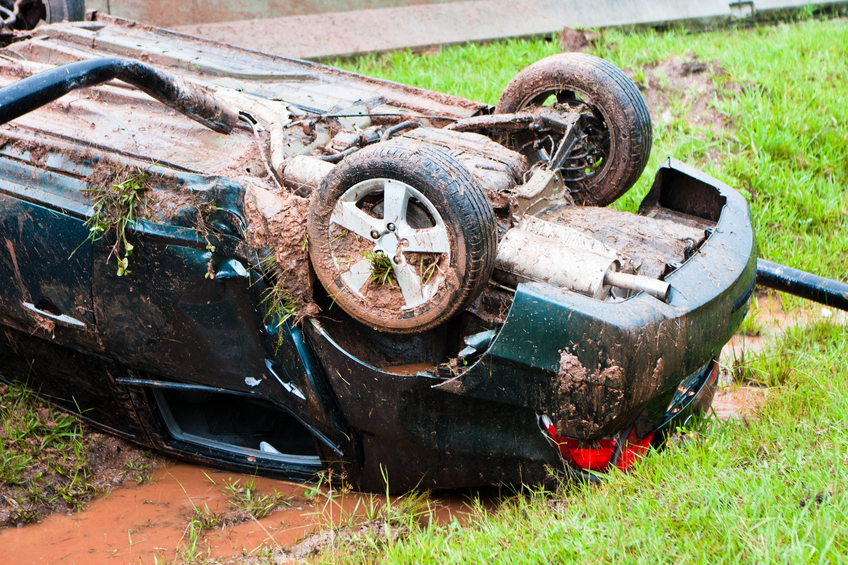
Few motor vehicle accidents are more violent than an SUV rollover. A vehicle may leave the pavement, strike a curb or embankment, trip on soft soil, collide with another automobile, or suddenly lose stability during an emergency maneuver. Within seconds, the SUV can roll onto its side or roof, subjecting the occupants to repeated impacts while windows break, airbags deploy, the roof may deform, and unsecured objects move throughout the passenger compartment.
The injuries can be catastrophic. Rollover victims may suffer traumatic brain injuries, spinal cord damage, paralysis, crushed or fractured limbs, internal organ injuries, severe lacerations, amputations, and permanent disabilities. Occupants can also be partially or completely ejected from the vehicle. Some rollover accidents result in death at the scene or injuries from which the victim later dies.
At Barrett Law, PLLC, we represent people seriously injured in SUV rollover accidents throughout Mississippi and families who have lost loved ones in fatal crashes. Jonathan Barrett investigates more than the final rollover itself. We want to determine what caused the SUV to become unstable, whether another driver initiated the crash, whether speed or roadway conditions contributed, whether tires or other vehicle components failed, and whether the SUV’s design or occupant-protection systems require further investigation.
A rollover does not necessarily have a single cause. Another driver’s negligence may initiate the accident while roadway conditions affect the vehicle’s movement and vehicle performance affects the severity of the occupants’ injuries. Identifying each contributing factor can be critical to determining who may be legally responsible.
Why SUVs Can Be Involved in Rollover Accidents
SUVs offer benefits that make them popular with Mississippi families, including passenger capacity, cargo space, ground clearance, and utility. Their physical characteristics, however, differ from lower passenger cars.
A vehicle’s center of gravity, track width, suspension, tires, load, speed, steering inputs, and roadway conditions can all affect stability. A rollover may occur when forces acting on the vehicle become sufficient to tip it onto its side.
Some rollovers are “tripped” when a sliding vehicle encounters a curb, soft shoulder, ditch, guardrail, embankment, or another object that interrupts its lateral movement. Others may involve vehicle dynamics during rapid steering maneuvers.
The mere fact that an SUV rolled over does not establish that it was defective. Determining why a particular vehicle rolled requires analysis of the accident circumstances, vehicle condition, physical evidence, and, when appropriate, engineering evidence.
That distinction is important. A serious rollover claim should be based on evidence rather than an assumption that every SUV rollover resulted from the same cause.
Another Driver May Cause an SUV to Roll Over
Many rollover cases begin with ordinary driver negligence.
A speeding motorist may strike an SUV from the side. A distracted driver may force the SUV onto the shoulder. A vehicle may make an unsafe lane change and cause the SUV driver to make an emergency steering maneuver. A driver may cross the centerline, leaving the SUV operator with only seconds to avoid a head-on collision.
The SUV driver may avoid the first vehicle but lose control after entering a ditch, median, or soft shoulder.
In those circumstances, the negligent motorist who created the emergency may potentially bear responsibility for the resulting rollover even if the vehicles never physically touched.
These “no-contact” crashes can present proof problems. The responsible motorist may continue driving, and there may be no vehicle damage establishing what occurred.
Dashboard cameras, witnesses, traffic cameras, surveillance video, skid marks, roadway evidence, and other information may therefore become particularly important.
Speeding Can Dramatically Increase Rollover Danger
Speed can affect both the likelihood that a driver loses control and the violence of the resulting rollover.
A speeding driver has less time to recognize a curve, roadway hazard, slowing traffic, or another vehicle. High speed also increases the forces involved when a vehicle suddenly changes direction.
Mississippi Code § 63-3-1213 prohibits operating a vehicle carelessly or imprudently without due regard for such circumstances as roadway width, grade, curves, traffic, highway use, and other attendant conditions.
Speeding can be especially dangerous when combined with abrupt steering. A driver who suddenly swerves at highway speed to avoid an obstacle may lose control and leave the pavement.
Investigators may examine electronic vehicle data, tire marks, roadway evidence, witness statements, video footage, and vehicle damage when determining whether excessive speed contributed.
Tire Failure and SUV Rollovers
Tires are critical to vehicle stability and control. A sudden tread separation, blowout, loss of pressure, or other tire problem at highway speed can make controlling an SUV extremely difficult.
When a tire fails, the driver may instinctively brake or make a steering correction. The vehicle may move toward the shoulder, rotate, or leave the roadway before rolling.
A tire-related rollover deserves careful investigation.
The damaged tire should generally be preserved rather than discarded. Its age, maintenance history, tread, pressure history, damage, and manufacturing information may become relevant. The remaining tires should also be examined.
Responsibility may depend upon why the tire failed. Improper maintenance or inflation presents different issues from an alleged manufacturing or design defect.
When a defective product may have contributed, Mississippi’s Product Liability Act becomes relevant. Section 11-1-63 identifies circumstances under which a manufacturer, designer, or seller may potentially face liability for a defective and unreasonably dangerous product that proximately caused the claimed damages.
Defective Vehicle Components May Contribute to a Rollover
Tires are not the only vehicle components that can affect a rollover accident.
Steering, suspension, brakes, wheels, stability-control systems, and other components can potentially contribute to loss of control if they malfunction or fail.
Investigating a possible component failure may require preserving the entire vehicle.
Allowing a severely damaged SUV to be destroyed, salvaged, or substantially altered before appropriate inspection can eliminate important evidence.
Vehicle history can also matter. Maintenance records, prior repairs, recalls, service campaigns, and previous damage may help explain what occurred.
A component failure does not automatically establish manufacturer liability. The investigation must determine what failed, why it failed, whether a legally recognized defect existed, and whether that condition actually caused or contributed to the accident.
Mississippi Product Liability Law and Defective SUVs
Some rollover cases involve allegations that the vehicle itself or one of its components was defective.
Mississippi Code § 11-1-63 establishes important requirements for product liability claims. Among other provisions, the statute addresses allegations that a product deviated materially from specifications, contained inadequate warnings or instructions, was defectively designed, or breached certain express warranties or factual representations. A claimant must also establish the required connection between the defective and unreasonably dangerous condition and the damages.
These cases are substantially different from ordinary negligence claims against another driver.
Vehicle design claims can require automotive engineering, crash reconstruction, examination of alternative designs, testing information, technical records, and extensive discovery from manufacturers.
A rollover alone does not prove a design defect. The evidence must satisfy Mississippi’s statutory requirements.
For that reason, suspected vehicle-defect cases should be investigated before the SUV is released to a salvage company or destroyed.
Roof Crush and Occupant Protection
The rollover itself is only one part of the investigation. Another critical question is what happened to the passenger compartment while the vehicle was rolling.
Occupants rely on the vehicle’s structure and restraint systems to provide protection during a crash. In a severe rollover, the roof and surrounding structural components can experience significant forces.
If the roof intrudes substantially into the occupant space, a victim may suffer devastating head, neck, and spinal injuries.
An investigation may examine the pattern of roof deformation, occupant seating positions, seat belt evidence, window damage, airbag deployment, seat performance, and the overall crash sequence.
The existence of roof deformation does not automatically establish a defect. A qualified analysis must consider the severity and mechanics of the collision and whether a product-related claim can satisfy Mississippi law.
Seat Belts and Rollover Accidents
Seat belts are an important occupant-protection system during rollovers because they can help keep occupants within their seating positions and reduce the risk of ejection.
A rollover investigation may examine whether belts were used, whether they remained latched, whether pretensioners operated, and whether the restraint system performed as intended.
Importantly, Mississippi has a specific statutory rule concerning seat-belt nonuse. Mississippi Code § 63-2-3 provides that failure to provide or use a seat-belt restraint system is not to be considered contributory or comparative negligence.
That provision is significant because defendants may attempt to shift attention from the cause of the rollover to occupant restraint use.
The facts concerning restraint systems should still be preserved and investigated, particularly when a defect or system failure is suspected.
Occupant Ejection During an SUV Rollover
Ejection is one of the most dangerous events that can occur during a rollover.
An occupant may be partially or completely thrown from the passenger compartment and strike pavement, another vehicle, a guardrail, or other roadside objects. The rolling vehicle itself may also strike the ejected person.
Investigators may examine broken windows, doors, seat belts, seating positions, occupant marks, blood or biological evidence, and vehicle-restraint systems to determine how the ejection occurred.
An ejection case may involve questions concerning restraint use, glazing, door latches, vehicle structure, and other components depending upon the facts.
Because the damaged SUV itself may contain critical evidence, preserving it can be particularly important after a fatal or catastrophic ejection crash.
Dangerous Road Shoulders and Rollover Crashes
A vehicle does not necessarily roll because of something that happened inside the SUV.
Roadway conditions can transform a manageable lane departure into a catastrophic rollover.
A driver forced onto the shoulder may encounter a substantial pavement-edge drop, soft soil, erosion, a steep embankment, drainage ditch, damaged guardrail, or other hazard. When the driver attempts to return to the pavement, the vehicle may rotate or overturn.
These cases can involve another negligent driver as well as a governmental entity, road contractor, construction company, or other party responsible for the roadway condition.
Governmental claims present additional Mississippi Tort Claims Act issues and should be evaluated promptly because special requirements may apply.
Photographs and measurements should be obtained before the roadway condition is repaired or changed.
Rollover Accidents in Highway Medians
Mississippi interstates and divided highways frequently have medians separating opposing traffic.
When an SUV leaves its lane, a median may contain grass, slopes, drainage structures, cable barriers, guardrails, or other features that affect what happens next.
A vehicle entering soft ground sideways may trip and roll. An SUV can also strike a barrier and overturn.
Determining why the vehicle entered the median is the first issue. Distracted driving, another motorist’s lane change, a tire failure, excessive speed, or roadway conditions may all be possibilities.
The second issue is why the vehicle rolled and how the occupants were injured.
Treating those as separate questions can help identify multiple contributing causes.
Rollover Accidents Caused by Overcorrection
A driver whose tires leave the pavement may instinctively steer sharply back toward the roadway.
That maneuver can cause the vehicle to cross lanes, rotate, or roll.
Insurance companies sometimes characterize these crashes simply as “driver overcorrection.” That description may be incomplete.
Why did the vehicle leave the lane initially? Was the driver forced off the road by another motorist? Was there a pavement-edge drop? Did a tire fail? Was the roadway poorly marked?
The driver’s reaction must be evaluated in the context of the emergency that preceded it.
Mississippi’s comparative-negligence law may also become important when more than one person’s conduct contributed to the accident.
Rollover Accidents Involving Commercial Vehicles
An SUV can roll after being struck or forced from the roadway by an 18-wheeler, tractor-trailer, delivery truck, bus, or other commercial vehicle.
A truck making an unsafe lane change may force an SUV onto the shoulder. A trailer can sideswipe the vehicle and destabilize it. A truck rear-ending an SUV may push it into a median or barrier.
Commercial cases may provide additional sources of evidence.
Electronic logging devices, GPS information, onboard cameras, engine data, dispatch records, driver qualification information, and company safety policies may help establish why the truck driver created the emergency.
Depending upon the circumstances, the motor carrier, employer, vehicle owner, or other commercial entity may also bear responsibility.
Multiple-Vehicle Rollover Accidents
Some rollovers occur during complex chain-reaction crashes.
An SUV may first be sideswiped, then collide with another vehicle, enter the shoulder, and roll several times. Occupants may experience numerous impacts before the SUV finally stops.
Determining which event caused particular injuries can become difficult.
Accident reconstruction may help establish the sequence through vehicle damage, roadway evidence, electronic data, video footage, and witness testimony.
Multiple insurance companies may also become involved, with each attempting to place responsibility on another driver.
A complete investigation should identify the event that initiated the collision sequence as well as subsequent actions that contributed to the harm.
Traumatic Brain Injuries in SUV Rollovers
Rollover crashes can expose occupants to repeated changes in direction and multiple impacts.
The head may strike the roof, window, pillar, door, head restraint, or another interior surface. An occupant who is ejected may suffer an additional impact with the ground.
Traumatic brain injuries can produce headaches, memory problems, impaired concentration, dizziness, sleep disturbances, personality changes, speech problems, and cognitive limitations.
Some victims require lifelong assistance.
Brain injuries can be difficult for insurance companies and juries to appreciate because the person may appear physically normal. Medical evaluation, neuropsychological testing, family observations, employment evidence, and other documentation can help demonstrate how the injury changed the person’s abilities.
Spinal Cord Injuries and Paralysis
Roof intrusion, occupant movement, ejection, and violent impact can cause devastating spinal injuries.
Damage to the cervical spinal cord can result in paralysis affecting both the arms and legs. Lower spinal injuries may impair leg function, bowel and bladder control, sensation, and mobility.
Even when the spinal cord is not permanently damaged, vertebral fractures, disc injuries, and nerve compression may require surgery and extended rehabilitation.
A severe spinal injury can create lifetime costs involving medical care, wheelchairs, accessible housing, vehicle modifications, attendant care, medications, and future procedures.
The damages claim should account for those long-term needs rather than focusing only on the initial hospitalization.
Crush Injuries, Fractures, and Amputations
Occupants can become trapped within a deformed vehicle during a rollover.
Emergency personnel may need hydraulic equipment to remove doors, roofs, or other portions of the SUV.
Victims may suffer fractures to the arms, legs, pelvis, ribs, spine, shoulders, and facial bones. Severe crush injuries can damage muscles, nerves, and blood vessels and may sometimes result in amputation.
Orthopedic injuries can require several operations and months of physical therapy.
Permanent restrictions may prevent a victim from returning to physically demanding employment.
These vocational consequences can become a major component of damages when the injured person has decades of expected working life remaining.
Fatal SUV Rollovers and Mississippi Wrongful Death Claims
Rollover accidents can kill drivers and passengers through head trauma, spinal injuries, internal injuries, ejection, or crushing forces.
Mississippi’s wrongful death statute may allow qualifying beneficiaries or the appropriate representative to pursue a civil claim when actionable wrongful conduct causes death.
A fatal rollover requires careful investigation because several potential theories of responsibility may exist.
Another motorist may have initiated the crash. A commercial trucking company may be involved. A defective tire or vehicle component may require investigation. Roadway conditions may have contributed.
The damaged SUV itself can be one of the most important pieces of evidence in the entire case.
Families should therefore obtain legal guidance before authorizing destruction or disposal of the vehicle when a possible defect or occupant-protection issue is being considered.
Mississippi Comparative Negligence in Rollover Cases
Mississippi Code § 11-7-15 provides that an injured person’s contributory negligence does not automatically bar recovery. Instead, damages may be diminished in proportion to the negligence attributed to that person. (Justia Law)
This can be particularly important in rollover litigation because defendants may attempt to blame the SUV driver for speed, steering input, overcorrection, or another action.
But the driver’s conduct may be only part of the story.
Another vehicle may have created the emergency. A tire may have failed. A roadway defect may have contributed. Multiple parties may therefore bear different percentages of responsibility.
The investigation should identify each contributing factor before conclusions about fault are accepted.
Product Liability Claims Require a Different Investigation
A claim against another negligent driver and a claim involving an allegedly defective SUV are not interchangeable.
Driver negligence cases typically focus on speed, distraction, lane position, right-of-way, following distance, and similar conduct.
Product liability cases require evidence concerning the vehicle or component itself.
Under Miss. Code § 11-1-63, a claimant pursuing qualifying product-defect theories must establish statutory elements concerning the defect, unreasonable danger, and causation. The statute contains additional requirements applicable to particular theories, including design-defect claims.
That often means the SUV and relevant components need to remain available for inspection.
Technical professionals may need to examine the vehicle before repairs, destructive testing, or salvage operations alter the evidence.
Preserve the SUV After a Serious Rollover
One of the most important practical steps following a catastrophic rollover is preserving the vehicle when a possible vehicle or component issue exists.
Insurance companies may want to move a totaled SUV to a salvage facility quickly. Storage fees can accumulate, and the vehicle may eventually be sold or destroyed.
That process can eliminate evidence.
The vehicle may contain information about tire condition, roof deformation, seat belts, airbags, steering, suspension, electronic systems, door latches, windows, and occupant contacts.
Electronic modules may also contain crash-related information depending upon the make, model, and severity of the collision.
Before a potentially defective vehicle is destroyed, an attorney can evaluate whether preservation and professional inspection are appropriate.
Do Not Discard Failed Tires or Components
The same preservation principle applies to individual parts.
A failed tire should not simply be thrown away after the vehicle is towed. Broken suspension or steering components may also require examination.
Even small fragments can contain evidence showing how a component failed.
Photographs are useful, but photographs cannot always replace physical inspection.
If another party controls the vehicle or component, a preservation request may be appropriate to reduce the risk that evidence is altered or destroyed.
What Compensation May Be Available After a Mississippi SUV Rollover?
Rollover accidents often produce substantial damages because the injuries can be catastrophic.
Medical damages may include emergency transportation, trauma care, surgery, hospitalization, rehabilitation, diagnostic testing, medications, physical therapy, occupational therapy, assistive equipment, home healthcare, and future medical treatment.
A permanently injured person may lose months or years of wages and experience diminished lifetime earning capacity.
Homes and vehicles may require accessibility modifications.
Non-economic damages may address physical pain, emotional suffering, disability, disfigurement, and loss of enjoyment of life.
The value of a catastrophic rollover case cannot reasonably be determined from initial hospital bills alone. Future consequences may represent a substantial portion of the overall losses.
Insurance Coverage Can Become a Major Issue
Catastrophic injuries can quickly exceed the liability limits of an ordinary automobile insurance policy.
If another driver caused the rollover, investigators should determine all available liability coverage and whether additional policies or responsible parties exist.
Commercial vehicle accidents may involve larger insurance policies.
Uninsured or underinsured motorist coverage may also become relevant depending upon the circumstances and applicable policy.
If a product defect contributed, manufacturer or other product-liability coverage may present a separate potential source of recovery.
Identifying every legally responsible party and applicable insurance source can therefore be essential.
What Insurance Companies May Argue After an SUV Rollover
Insurance carriers may attempt to place responsibility entirely on the SUV driver.
They may argue the driver was speeding, overcorrected, failed to maintain the vehicle, or reacted improperly.
When a tire fails, the defense may allege improper inflation or inadequate maintenance. When a vehicle defect is claimed, defendants may argue that the severity of the crash rather than the product caused the injuries.
These arguments require evidence-based responses.
Vehicle preservation, reconstruction, maintenance history, electronic data, photographs, witness statements, roadway evidence, and engineering analysis can help determine which explanations are supported by the facts.
How Barrett Law, PLLC Investigates Dangerous SUV Rollover Accidents
At Barrett Law, PLLC, we investigate the entire rollover sequence.
We examine what caused the vehicle to lose control, what caused it to overturn, what occurred during the rollover, and how the occupants were injured.
Depending upon the case, the investigation may include vehicle preservation, electronic data, tire inspection, maintenance records, accident reconstruction, roadway evidence, photographs, surveillance video, dashboard cameras, witness testimony, commercial trucking records, and vehicle-component analysis.
When the evidence suggests a possible defective product, we evaluate whether Mississippi product liability law may apply and whether technical inspection is necessary.
We also document the full damages, including future medical care, rehabilitation, lost earnings, reduced earning capacity, permanent disability, and the effect of the injuries on the client’s everyday life.
Why Choose Barrett Law, PLLC After a Mississippi SUV Rollover?
A catastrophic rollover should not be treated as an ordinary automobile claim.
Jonathan Barrett represents seriously injured people and grieving families throughout Mississippi. Barrett Law, PLLC works to identify every contributing cause rather than simply accepting the first explanation offered by an insurer.
We investigate negligent drivers, commercial vehicles, dangerous roadway conditions, tire failures, possible vehicle defects, occupant-protection issues, and available insurance coverage when supported by the circumstances.
Early involvement can be particularly important when a damaged vehicle or failed component must be preserved.
Our goal is to build the evidence necessary to determine why the SUV rolled, who bears legal responsibility, and what compensation is required to address the client’s complete losses.
Frequently Asked Questions About Dangerous SUV Rollover Accidents in Mississippi
Why Do SUVs Roll Over?
There is no single cause. Rollover dynamics can involve vehicle speed, center of gravity, steering inputs, roadway conditions, collision forces, tire performance, and the terrain encountered after a vehicle leaves the pavement. Some vehicles are tripped after striking a curb, soft shoulder, or embankment. A proper investigation focuses on what caused the particular rollover rather than assuming all rollovers happen the same way.
Can Another Driver Be Responsible Even if Their Vehicle Never Hit My SUV?
Potentially. Another driver may make an unsafe lane change, cross the centerline, or otherwise force an SUV from the roadway. The SUV driver may then lose control or roll while avoiding a direct collision. These cases can be more difficult to prove without physical contact, making witnesses, cameras, and roadway evidence particularly important.
Can I Sue if a Defective Tire Caused the Rollover?
Potentially, if the evidence satisfies Mississippi’s product liability requirements. A tire failure alone does not automatically establish a defect because maintenance, inflation, road hazards, age, and other factors may contribute. Preserving the tire and vehicle allows appropriate professionals to determine how and why the failure occurred. Mississippi product claims are governed substantially by Miss. Code § 11-1-63. (Justia Law)
Can an SUV Manufacturer Be Responsible for a Rollover?
Potentially, but a rollover alone does not establish manufacturer liability. Mississippi law requires proof of the applicable elements for a product-defect claim, including the required connection between a defective and unreasonably dangerous condition and the damages. Design-defect allegations have additional statutory requirements. The vehicle generally needs to be preserved so the facts can be evaluated. (Justia Law)
What Is a Roof-Crush Case?
The term generally refers to a rollover in which roof deformation or intrusion becomes relevant to the occupants’ injuries. Investigators may examine the vehicle structure, crash severity, occupant position, restraint systems, and injury mechanisms. Roof deformation does not by itself prove a defective design, so technical analysis may be required before determining whether a product claim is supportable.
What Should I Do With the SUV After a Serious Rollover?
Do not authorize destruction or disposal without first considering whether the vehicle contains important evidence. This is particularly important when tire failure, steering problems, roof performance, restraint systems, door latches, or another possible product issue is suspected. Photographs alone may not preserve everything necessary for later inspection.
Can the Insurance Company Blame Me for Overcorrecting?
It may try. Whether an overcorrection was negligent depends upon the entire sequence. Another driver, defective shoulder, tire failure, debris, or other hazard may have created the emergency. Mississippi comparative negligence permits damages to be reduced according to an injured person’s assigned negligence rather than automatically barring recovery because some fault is alleged.
What if I Was Not Wearing a Seat Belt?
Mississippi has a particularly important rule on this issue. Section 63-2-3 provides that failure to provide or use a seat-belt restraint device or system shall not be considered contributory or comparative negligence. The specific circumstances should still be reviewed carefully, particularly when restraint-system performance is part of the investigation.
What if a Commercial Truck Forced My SUV Off the Highway?
The truck driver and potentially a motor carrier or another commercial entity may bear responsibility depending upon the facts. Commercial cases may provide evidence such as onboard cameras, electronic logs, GPS records, telematics, driver files, and company safety records. Preserving that evidence promptly can be important.
Can a Dangerous Road Shoulder Cause a Rollover?
Yes. A pavement-edge drop, soft shoulder, steep embankment, ditch, construction condition, or other roadway hazard may contribute to a rollover after a vehicle leaves its lane. The responsible governmental entity or contractor may warrant investigation. Claims against governmental entities can involve special procedural requirements and immunity issues.
What Compensation Can I Recover After a Rollover?
Depending upon liability and the injuries, compensation may include past and future medical expenses, rehabilitation, lost wages, diminished earning capacity, disability-related expenses, physical pain, emotional suffering, disfigurement, property damage, and other legally recoverable losses. Catastrophic cases frequently require substantial analysis of future medical and vocational needs.
What if My Loved One Died in an SUV Rollover?
A Mississippi wrongful death claim may be available when another party’s legally actionable conduct caused the fatal accident. Because rollover cases may involve drivers, commercial entities, roadway conditions, tires, or vehicle components, prompt investigation can be particularly important. Families should also consider preserving the SUV before it is destroyed or salvaged.
How Soon Should a Mississippi Rollover Accident Be Investigated?
As soon as reasonably possible. Vehicles can be salvaged, failed components discarded, electronic information overwritten, road conditions altered, surveillance video erased, and witnesses lost. The physical SUV can be especially important when a possible tire, vehicle, roof, restraint, or other component issue needs investigation.
Barrett Law, PLLC Represents SUV Rollover Victims Throughout Mississippi
Barrett Law, PLLC represents people seriously injured in rollover crashes and families who have suffered fatal losses throughout the Mississippi Gulf Coast, Central Mississippi, Southern Mississippi, and Northern Mississippi, including Jackson, Gulfport, Southaven, Hattiesburg, Biloxi, Olive Branch, Tupelo, Meridian, Pearl, Madison, Greenville, Oxford, Clinton, Horn Lake, Brandon, and surrounding Mississippi communities.
Whether the rollover began with another driver’s unsafe maneuver, a commercial truck collision, a dangerous shoulder, tire failure, or a suspected vehicle problem, we work to determine what initiated the accident, why the SUV overturned, and what factors contributed to the occupants’ injuries.
Injured in a Dangerous SUV Rollover in Mississippi? Call Jonathan Barrett 24/7/365
An SUV rollover can leave a family dealing with catastrophic injuries, permanent disability, enormous medical costs, or the death of someone they love. These cases may involve far more than determining which driver received a traffic citation. The vehicle, tires, roadway, electronic data, occupant-protection systems, and conduct of other motorists may all require investigation.
Barrett Law, PLLC investigates serious Mississippi rollover crashes, works to preserve vehicles and components when necessary, identifies negligent drivers and commercial defendants, evaluates potential roadway and product-related claims when supported by the evidence, and documents the full extent of catastrophic losses.
Call Mississippi attorney Jonathan Barrett 24/7/365 at (601) 790-1505 for your FREE consultation.